bohme trumpet concerto pdf
Oskar Bohme’s Trumpet Concerto: A Comprehensive Guide (as of 04/21/2026)
Finding a Bohme Trumpet Concerto PDF score requires exploring resources like IMSLP and commercial vendors, carefully considering quality and potential editing needs.
Oskar Bohme, born near Dresden in 1878, navigated a complex life as an integrated immigrant musician, a facet often overshadowing his compositional achievements. His story, tragically cut short, is interwoven with the socio-political climate of his time. While often overlooked today, Bohme’s Trumpet Concerto, Op. 18, stands as a significant work within the late Romantic and early 20th-century repertoire.
To understand Bohme’s musical voice, one must consider the influences of his era. The late Romantic period, characterized by expansive harmonies and emotional depth, provided a fertile ground for his compositional style. Resources like IMSLP offer access to his scores, including the trumpet concerto, allowing modern audiences to explore his work. His concerto, featured within collections on IMSLP, exemplifies these characteristics.
Historical Background of the Trumpet Concerto, Op. 18
Böhme’s Trumpet Concerto, Op. 18, emerged during a period of evolving orchestral and solo instrumental writing. The early 20th century witnessed a growing demand for concertos showcasing the technical capabilities of instruments like the trumpet. Finding a reliable PDF score is crucial for understanding its historical context.
IMSLP serves as a valuable resource, housing digitized scores, including this concerto, allowing researchers and performers to access the work directly. The concerto’s composition reflects the late Romantic tradition, yet hints at emerging modernistic tendencies. Accessing a quality PDF version facilitates detailed analysis of Bohme’s orchestration and harmonic language, revealing its place within the broader musical landscape of the time.
Bohme’s Life and Career: An Integrated Immigrant Musician
Oskar Bohme’s journey as an immigrant musician profoundly shaped his compositional voice. Born near Dresden, his career unfolded largely in the United States, blending European training with American influences. Locating a PDF of his Trumpet Concerto, Op. 18, offers insight into this unique synthesis.
His ability to navigate two cultures is reflected in the concerto’s stylistic blend. Accessing a digital PDF score allows for detailed study of the work’s harmonic and melodic characteristics, revealing subtle nuances influenced by both his origins and adopted homeland. Bohme’s story, often overlooked, is illuminated through careful examination of his compositions, readily available through online resources.
The Compositional Style of Oskar Bohme
Böhme’s compositional style is rooted in late Romanticism, yet displays a distinctive voice. Studying the Trumpet Concerto, Op. 18, via a readily available PDF score, reveals a penchant for lyrical melodies and rich harmonic textures. His work isn’t overtly experimental, but demonstrates a refined craftsmanship.
A PDF version facilitates detailed analysis of his orchestration and melodic development. The concerto showcases Bohme’s skill in balancing virtuosic display with expressive depth. While not widely celebrated during his lifetime, accessing and studying his scores, like the trumpet concerto PDF, allows modern musicians to appreciate his unique contribution to the repertoire.
Analyzing the Trumpet Concerto’s Structure
The Trumpet Concerto, Op. 18, is a three-movement work, a standard concerto form. Obtaining a PDF score is crucial for detailed structural analysis. The first movement, Allegro moderato, establishes thematic material. The second, Andante, offers lyrical contrast, while the final Allegro provides virtuosic brilliance.
A PDF allows close examination of Bohme’s key relationships and formal choices. Studying the score reveals a clear understanding of classical structures, infused with Romantic expression. Accessing a digital PDF version simplifies harmonic and melodic tracing, aiding in a comprehensive understanding of the concerto’s architecture.
Movement I: Allegro moderato — Form and Key
The Allegro moderato, the concerto’s opening, is typically analyzed as sonata form. A readily available PDF score is invaluable for tracing the exposition, development, and recapitulation. Examining the PDF reveals Bohme’s key choices, often beginning in a major key, establishing a bright character.
Detailed study of the PDF demonstrates how Bohme introduces thematic material, contrasting ideas, and transitional passages. The PDF facilitates harmonic analysis, revealing modulations and chord progressions. Understanding the form through a PDF score enhances appreciation for Bohme’s compositional technique and structural clarity.
Movement II: Andante ⎼ Lyrical Content and Harmonic Language
The Andante movement, accessible via a PDF score, showcases Bohme’s lyrical sensibilities. A clear PDF allows close examination of the melodic lines, revealing a focus on expressive phrasing and nuanced dynamics. The harmonic language, visible in the PDF, often employs rich chords and subtle chromaticism.
Dissecting the PDF reveals Bohme’s use of harmonic color to enhance the emotional depth of the movement. Studying the PDF facilitates understanding of the interplay between the trumpet and orchestra, highlighting the lyrical dialogue. Access to a quality PDF is crucial for performers and analysts alike, unlocking the movement’s expressive potential.
Movement III: Allegro — Virtuosity and Concluding Themes
The Allegro, readily available through a detailed PDF score, is a showcase of technical brilliance. A clear PDF allows performers to navigate the rapid passages and demanding articulations with precision. Examining the PDF reveals Bohme’s masterful orchestration, supporting the trumpet’s virtuosic display.
Discovering the concluding themes within the PDF demonstrates Bohme’s skill in thematic development. A high-quality PDF is essential for understanding the movement’s structure and harmonic language. Studying the PDF reveals how Bohme integrates earlier motifs, creating a satisfying and conclusive finale. Accessing the PDF unlocks the full potential of this energetic movement.
Technical Demands for the Trumpet Performer
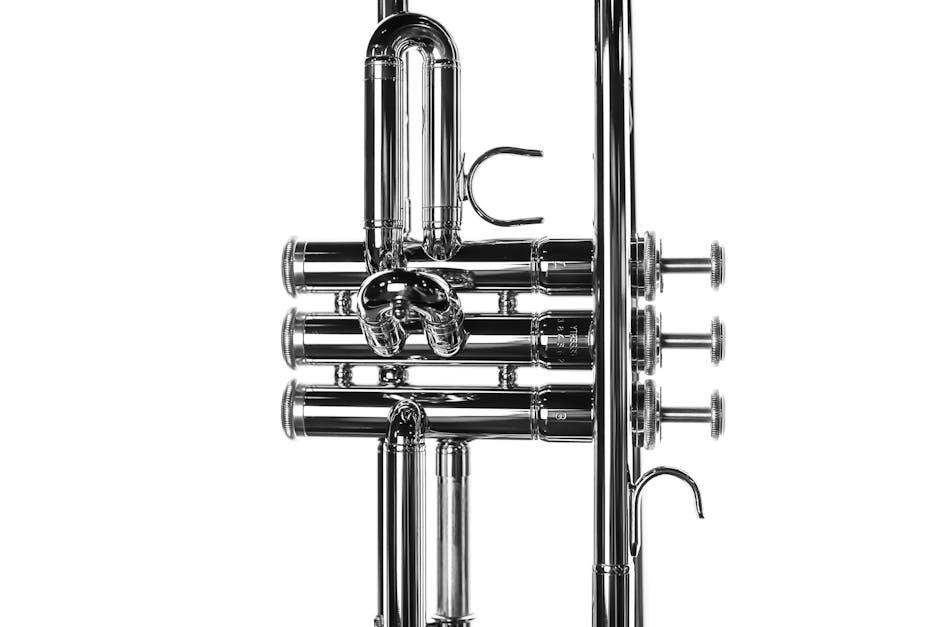
Accessing a clear PDF score is crucial for understanding the concerto’s technical challenges. The PDF reveals significant range demands, requiring the trumpeter to confidently navigate both high and low registers. Endurance is paramount, as the PDF showcases sustained passages and rapid-fire articulation.
Studying the PDF highlights specific articulation challenges, including staccato, legato, and complex rhythmic figures. Tone color variations, visible within the PDF’s notation, demand a versatile and expressive performer. A well-prepared PDF allows for detailed practice and mastery of these demanding techniques, ensuring a compelling performance.
Range and Endurance Requirements
The PDF score of Bohme’s concerto immediately reveals substantial range demands for the trumpeter. High C is frequently utilized, requiring exceptional upper register control. Conversely, the PDF also features passages descending to the lower reaches of the instrument, demanding a robust and resonant low register.
Endurance is critically tested throughout, as the PDF displays lengthy sustained passages and numerous technically challenging runs. A performer must possess significant breath control and embouchure strength. Careful study of the PDF allows for targeted practice, building the necessary stamina to navigate the concerto’s demanding physical requirements effectively.
Specific Articulation and Tone Color Challenges
Analyzing the Bohme Trumpet Concerto PDF reveals nuanced articulation markings, demanding precision and clarity from the performer. Frequent use of staccato, legato, and marcato requires a versatile technique. The PDF score also highlights a need for varied tone colors, shifting from brilliant and assertive to lyrical and expressive.
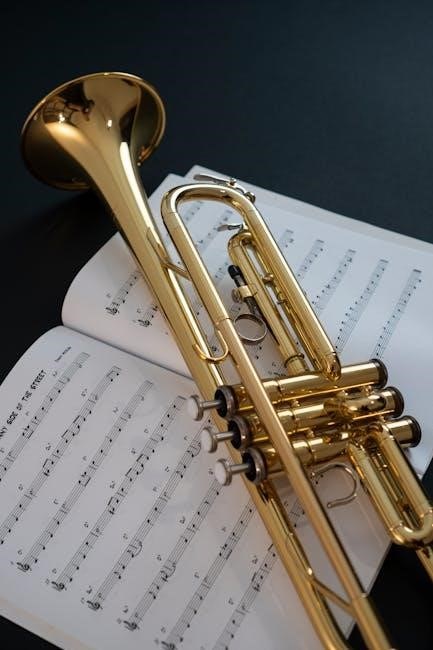
Mastering these subtleties is crucial for conveying the concerto’s emotional depth. The PDF’s dynamic markings further emphasize the importance of tonal control. Successfully navigating these challenges requires diligent practice and a deep understanding of the composer’s intent, as evidenced within the PDF itself.
Orchestration and its Role in the Concerto
The Bohme Trumpet Concerto PDF score showcases a rich and colorful orchestration, integral to the work’s dramatic impact. Bohme skillfully employs woodwinds to create contrasting textures, often providing delicate countermelodies to the trumpet’s virtuosic lines. The PDF reveals a prominent role for the brass section, offering powerful support and harmonic depth.
Studying the PDF demonstrates how Bohme utilizes the orchestra not merely as accompaniment, but as an active participant in the musical dialogue. String writing is equally important, providing both rhythmic drive and lyrical passages. The full orchestral score, available in PDF format, is essential for understanding Bohme’s compositional artistry.
The Concerto’s Reception and Critical History
Accessing the Bohme Trumpet Concerto PDF allows modern audiences to assess a work initially met with moderate, though generally positive, reception. Early reviews, often found alongside the PDF score in digital archives, praised the concerto’s melodic invention and technical demands.
However, the concerto didn’t immediately achieve widespread popularity, potentially due to Bohme’s relative obscurity and tragic personal history. The PDF’s availability has spurred renewed interest, leading to more frequent performances and scholarly analysis. Contemporary critics, studying the PDF, acknowledge its late-Romantic influences and unique expressive qualities, solidifying its place in the trumpet repertoire.
Finding a Bohme Trumpet Concerto PDF Score
Securing a Bohme Trumpet Concerto PDF requires navigating several online avenues. The International Music Score Library Project (IMSLP) is a primary resource, often hosting public domain scores, including potentially this concerto’s PDF.
Commercial sheet music vendors also offer PDF versions for purchase, providing potentially higher-quality editions. When selecting a PDF, carefully evaluate its source and clarity. Consider factors like page legibility, completeness, and any editorial markings. Ensure the PDF is suitable for performance or study, as quality varies significantly. A clean, well-formatted PDF is crucial for effective rehearsal and performance.
IMSLP (International Music Score Library Project) Resources
IMSLP serves as a valuable, free repository for public domain musical scores, potentially including Oskar Bohme’s Trumpet Concerto PDF. Users can search the IMSLP database directly using composer and work titles to locate available scores.
Through IMSLP, various editions might be accessible, ranging in quality and completeness. It’s crucial to carefully review any found PDF for accuracy and editorial markings. While IMSLP offers convenient access, remember that scores are user-submitted, so verification is recommended. Explore related listings under “Concertos” or “Trumpet” to uncover additional resources. Always check the licensing information before using any downloaded PDF.
Commercial Sheet Music Vendors Offering PDF Versions
Several commercial sheet music vendors provide digital PDF versions of orchestral scores, potentially including Oskar Bohme’s Trumpet Concerto. Websites like Musicnotes.com, Sheet Music Plus, and JW Pepper often carry a wide selection of scores for purchase.
Commercial PDFs generally offer higher quality and accuracy compared to freely available sources, often featuring professionally edited scores. However, these versions require a purchase. Search specifically for “Bohme Trumpet Concerto” on these platforms to check availability and pricing. Consider factors like page layout and print quality before finalizing your purchase, ensuring the PDF meets your performance needs.
Considerations for PDF Score Quality and Editing
When sourcing a Bohme Trumpet Concerto PDF, assess the scan quality carefully. Poor scans can result in illegible notes or markings, hindering performance preparation. Examine the clarity of the trumpet part and orchestral reduction.
Editing may be necessary, especially with older or freely distributed PDFs. Look for errors in notation, missing dynamics, or incorrect fingerings. Software like MuseScore or Finale can facilitate editing, but requires musical proficiency. Prioritize scores from reputable sources to minimize editing needs, ensuring a reliable and accurate performance edition. Always cross-reference with other resources if possible.
Performance Practice Considerations
Performing Bohme’s Trumpet Concerto demands attention to late-Romantic stylistic nuances. A lyrical approach, particularly in the Andante, is crucial, emphasizing phrasing and tone color. PDF scores should be annotated with dynamic markings and articulation to guide interpretation.
Technical passages require both precision and expressive freedom. Balance virtuosic display with musicality, avoiding a purely mechanical execution. Consider the orchestral context, blending with the ensemble rather than overpowering it. Researching recordings and scholarly analyses, accessible alongside the PDF, will inform historically informed performance choices.
Notable Recordings of Bohme’s Trumpet Concerto
Available recordings of Bohme’s Trumpet Concerto offer valuable insights for performers studying from a PDF score. While a definitive “best” recording remains subjective, several stand out for their interpretation and technical quality. Identifying these recordings alongside your PDF provides aural models for phrasing, articulation, and overall stylistic approach.
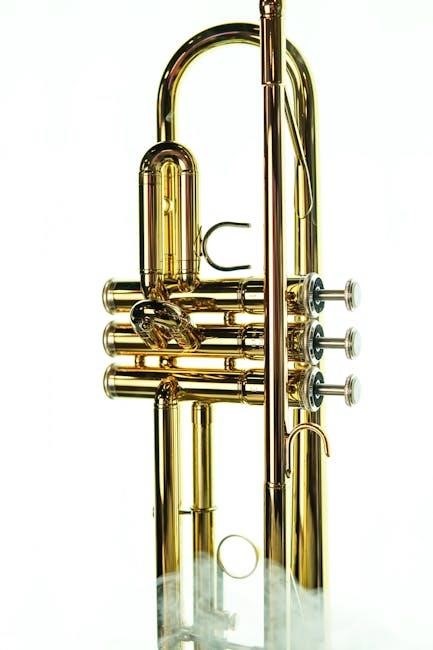
References to specific artists and orchestras can be found through online music databases and reviews. Comparing different interpretations enhances understanding of the concerto’s expressive possibilities. Accessing these recordings complements the study of the PDF, bridging the gap between notation and performance practice, enriching the learning experience.
Bohme’s Other Works for Trumpet and Orchestra
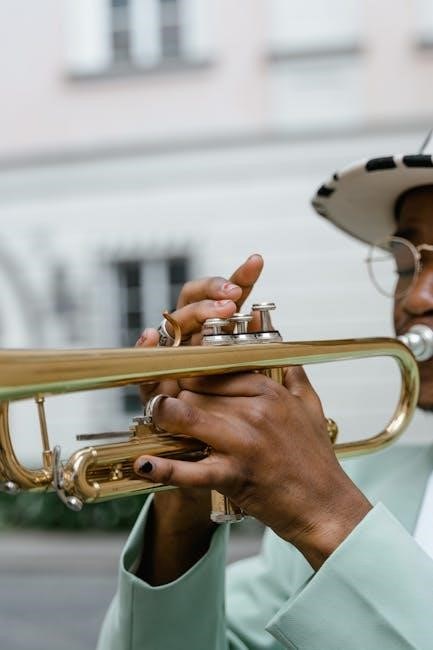
While the Trumpet Concerto, Op. 18, remains Bohme’s most celebrated work for the instrument, exploring his other compositions provides context for understanding his compositional style, especially when studying a PDF score. Investigating these pieces reveals recurring thematic elements and harmonic preferences.
Although less frequently performed, these supplementary works offer valuable insights for trumpeters and conductors. Accessing scores – potentially in PDF format – allows for comparative analysis. This broader perspective enriches the interpretation of the concerto itself, deepening appreciation for Bohme’s unique voice within the late Romantic era, complementing your PDF study.
The Influence of Late Romanticism on Bohme’s Concerto
Bohme’s Trumpet Concerto, Op. 18, is deeply rooted in the late Romantic aesthetic, evident in its lush harmonies and expressive melodic lines. Studying a PDF score reveals the influence of composers like Richard Strauss and Gustav Mahler. The concerto’s emotional intensity and expanded harmonic language are hallmarks of this period.
Analyzing the PDF allows observation of Bohme’s use of chromaticism and extended tonality, characteristic of late Romanticism. This influence extends to the orchestration, creating a rich and colorful soundscape. Understanding this context enhances appreciation for the concerto’s artistic merit and its place within the broader musical landscape, enriching your PDF exploration.
Bohme’s Tragic Fate and its Impact on His Legacy
Bohme’s life, tragically cut short, casts a poignant shadow over his musical output. Born near Dresden in 1878, his identity as an integrated immigrant ultimately sealed his fate. Accessing a PDF score of the Trumpet Concerto doesn’t reveal this personal history, but understanding it deepens the listening experience.
The concerto’s emotional depth may be interpreted through the lens of Bohme’s struggles. Despite his tragic end, the PDF score ensures his music survives. His legacy, though initially obscured, is now being reassessed, with increasing recognition of his compositional talent. Studying the PDF contributes to preserving and celebrating his work.
Comparing Bohme’s Concerto to Other Trumpet Concertos of the Era
Comparing Bohme’s Trumpet Concerto, readily available as a PDF, to contemporaries reveals its unique characteristics. While other concertos focused on virtuosic display, Bohme’s work balances technical demands with lyrical expression. Obtaining a PDF allows detailed score analysis, highlighting its late-Romantic influences.
Differences emerge in orchestration and harmonic language. Bohme’s concerto, as seen in the PDF, exhibits a distinctive voice, distinct from the more flamboyant styles of some peers. Accessing the PDF facilitates direct comparison, revealing Bohme’s subtle yet powerful compositional approach. It’s a valuable tool for understanding its place within the trumpet repertoire.
The Concerto’s Place in the Standard Trumpet Repertoire
Although not as ubiquitously performed as concertos by Haydn or Hummel, Bohme’s Trumpet Concerto, easily accessible as a PDF, is gaining recognition. The availability of a quality PDF score has aided its study and performance. It represents a significant, though often overlooked, contribution to the late-Romantic trumpet literature.
Its increasing presence in audition lists and recitals demonstrates a growing appreciation for its musical depth. A readily available PDF version encourages exploration by performers and educators alike. While not yet “standard,” its unique qualities ensure its continued relevance, bolstered by convenient PDF access for analysis and practice.
Resources for Further Study of Oskar Bohme
Researching Oskar Bohme remains challenging due to limited biographical material, however, accessing his Trumpet Concerto as a PDF provides a crucial starting point. IMSLP offers the score, facilitating analytical study. Exploring related orchestral scores, also often available as PDF downloads, reveals Bohme’s compositional style.
Although dedicated Bohme scholarship is scarce, examining late-Romantic trumpet repertoire contextually is beneficial. Online music databases and libraries may hold related articles. The concerto’s PDF score itself serves as a primary source, enabling detailed harmonic and melodic investigation, furthering understanding of this intriguing composer.
The Enduring Appeal of Bohme’s Trumpet Concerto
Despite a tragic life and relative obscurity, Oskar Bohme’s Trumpet Concerto, readily available as a PDF, continues to captivate performers and audiences. Its accessibility through resources like IMSLP ensures its survival and study. The PDF format allows for detailed score analysis, revealing a compelling blend of late-Romantic lyricism and virtuosic demands.
The concerto’s enduring appeal lies in its expressive depth and technical challenges. Obtaining the score as a PDF empowers trumpeters to engage with this unjustly neglected work. Bohme’s concerto deserves a prominent place in the standard repertoire, and its digital availability fosters wider appreciation.