
wade organic chemistry 9th edition pdf
Wade Organic Chemistry 9th Edition PDF: A Comprehensive Guide
Wade’s 9th edition offers a modern approach to organic principles‚ focusing on reaction mechanisms and synthetic organic chemistry‚ enhanced by refined pedagogy.
Overview of the 9th Edition
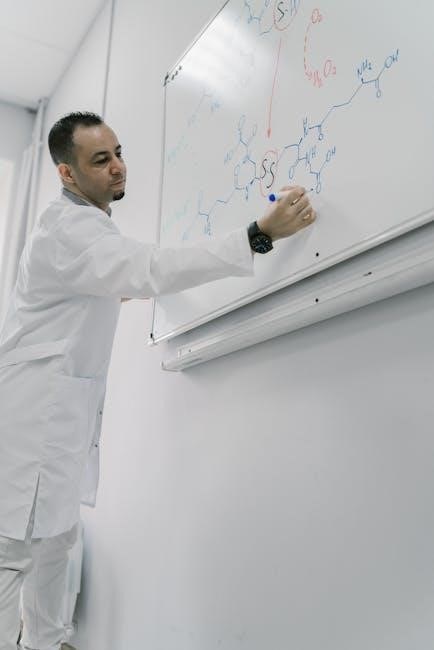
Wade Organic Chemistry‚ 9th Edition‚ presents a thoroughly updated and contemporary exploration of organic chemistry principles. This edition builds upon its strong foundation‚ emphasizing fundamental reasoning and effective problem-solving skills. The text is designed to complement how students learn‚ offering a clear and concise presentation of complex concepts.
It features a wealth of examples and applications‚ guiding students through reaction mechanisms and synthetic strategies. The 9th edition maintains its commitment to providing students with the tools necessary to succeed in organic chemistry‚ while incorporating modern pedagogical approaches. It’s a 1258-page resource‚ including an index‚ intended for both students and instructors.
Key Features and Updates
The 9th Edition of Wade Organic Chemistry boasts unparalleled pedagogy‚ meticulously refined to enhance student comprehension. Key updates include a focus on contemporary organic principles and improved clarity in explaining reaction mechanisms. The text provides a robust framework for understanding synthetic organic chemistry.
Students benefit from a wealth of practice questions and exam-style problems‚ available in the accompanying Test Bank. Furthermore‚ the Solutions Manual offers fully-explained answers to all in-chapter problems‚ aiding mastery of complex reactions. This edition aims to equip students with the skills needed for success‚ offering a comprehensive and accessible learning experience.
Target Audience
Wade Organic Chemistry‚ 9th Edition‚ is primarily designed for undergraduate students taking a first or second-semester organic chemistry course. It caters to students in chemistry‚ biochemistry‚ and related fields‚ such as pre-med and chemical engineering. The textbook’s approach is suitable for those seeking a strong foundation in organic principles.
The text’s clear explanations and problem-solving focus also benefit students preparing for standardized exams like the MCAT. Instructors will find the accompanying resources‚ including the Test Bank and Solutions Manual‚ valuable for assessment and student support. It’s ideal for a diverse range of learners.

Content Breakdown & Core Concepts
The 9th edition systematically covers organic chemistry fundamentals‚ from structure and bonding to alkanes‚ cycloalkanes‚ and stereochemistry‚ building a strong conceptual base.
Chapter 1: Structure and Bonding
Chapter 1 of Wade’s Organic Chemistry‚ 9th Edition‚ lays a crucial foundation by exploring atomic structure‚ bonding theories‚ and molecular representations. It delves into Lewis structures‚ VSEPR theory‚ and hybridization‚ explaining how these concepts dictate molecular geometry and polarity.
Students will learn to predict bond angles‚ identify functional groups‚ and understand the relationship between structure and properties. The chapter emphasizes the importance of resonance and formal charge in determining molecular stability.
Furthermore‚ it introduces concepts like electronegativity and dipole moments‚ vital for comprehending intermolecular forces and reactivity. Mastering this chapter is essential for success in subsequent topics‚ providing the groundwork for understanding reaction mechanisms and organic transformations.
Chapter 2: Alkanes and Cycloalkanes
Chapter 2 in Wade’s Organic Chemistry‚ 9th Edition‚ focuses on alkanes and cycloalkanes – the foundational saturated hydrocarbons. It covers nomenclature rules for both straight-chain and branched alkanes‚ alongside systematic naming of cycloalkanes‚ including substituted variations.
The chapter details conformational analysis‚ exploring the energy differences between staggered and eclipsed conformations using Newman projections. Ring strain in cycloalkanes is thoroughly discussed‚ explaining its impact on reactivity and stability.
Students will learn about the physical properties of alkanes and cycloalkanes‚ and their reactions‚ primarily combustion and halogenation. This chapter builds a strong understanding of basic hydrocarbon structures and their behavior‚ preparing students for more complex organic compounds.
Chapter 3: Stereochemistry
Chapter 3 of Wade’s Organic Chemistry‚ 9th Edition‚ delves into the crucial world of stereochemistry. It begins with a detailed exploration of chirality‚ enantiomers‚ and diastereomers‚ emphasizing their distinct properties and significance in organic reactions.
Students will master the Cahn-Ingold-Prelog priority rules for assigning R and S configurations‚ vital for accurately representing stereocenters. The chapter also covers meso compounds and racemic mixtures‚ clarifying their unique characteristics.
Furthermore‚ it examines the concepts of optical activity and the use of polarimetry; Understanding stereochemistry is fundamental‚ as it profoundly influences the reactivity and biological activity of organic molecules‚ making this chapter essential.

Supplementary Materials & Resources
Wade’s 9th edition is complemented by a robust test bank and solutions manual‚ aiding student learning and exam preparation with detailed problem solving.
Wade Organic Chemistry 9th Edition Test Bank
The Wade Organic Chemistry 9th Edition Test Bank is a valuable resource designed to help students assess their understanding of key concepts. This extensive collection features a wide array of practice questions‚ meticulously crafted to mirror the style and difficulty of exam questions found in the textbook.
It includes problems covering reaction mechanisms‚ spectroscopic analysis‚ and conceptual assessments‚ allowing students to test their knowledge and identify areas needing further study. Preparing for exams becomes more effective with this tool‚ offering a comprehensive review of the material presented by Wade and Simek.
The test bank consists of 111 pages‚ providing ample opportunity for practice and reinforcement of learning.
Wade Organic Chemistry 9th Edition Solutions Manual
The Wade Organic Chemistry 9th Edition Solutions Manual serves as an indispensable companion for students tackling complex problems within the textbook. It provides fully-explained solutions to every problem presented‚ enabling a deeper understanding of reaction mechanisms and intricate chemical processes.
Covering all chapters comprehensively‚ the manual offers clear‚ step-by-step explanations designed to guide students through challenging concepts. Both students and instructors benefit from this resource‚ fostering a more effective learning experience. Mastering organic chemistry becomes more attainable with this detailed support system.
It’s intended to aid in understanding in-chapter exercises and overall comprehension.
Accessing the PDF Version
Obtaining the Wade Organic Chemistry 9th Edition in PDF format offers convenient and portable access to this essential textbook. Numerous online platforms provide options for downloading the PDF‚ catering to diverse student needs and preferences. Instant access is frequently advertised‚ allowing immediate commencement of studies.
However‚ users should exercise caution and verify the legitimacy of the source to ensure a safe and legal download. Be mindful of copyright restrictions and potential security risks associated with unofficial websites. Prioritize reputable vendors to guarantee a high-quality PDF version of the textbook.
Ensure your device supports PDF viewing for optimal usability.

Utilizing the Textbook for Effective Learning
Wade’s 9th edition aids mastery of complex reactions and mechanisms‚ offering clear explanations and problem-solving strategies for students navigating organic chemistry.
Strategies for Studying Reaction Mechanisms
Wade’s 9th edition emphasizes fundamental reasoning for tackling reaction mechanisms. Begin by meticulously drawing out each step‚ utilizing curved arrows to illustrate electron flow – a core tenet of organic chemistry.
Practice identifying intermediates and transition states‚ understanding their roles in determining reaction rates and selectivity. Focus on recognizing common mechanistic patterns‚ like SN1‚ SN2‚ E1‚ and E2 reactions.
Utilize the textbook’s examples as templates‚ then apply the principles to novel problems. Don’t simply memorize; strive to understand why reactions proceed as they do. The accompanying solutions manual provides invaluable support for checking your work and clarifying any confusion.
Spectroscopy and its Application
Wade’s 9th edition integrates spectroscopic techniques – NMR‚ IR‚ and Mass Spectrometry – as essential tools for structure elucidation. Mastering these methods allows students to confidently determine the structure of unknown organic compounds.
The text emphasizes correlating spectral data with molecular features‚ enabling accurate interpretation. Practice analyzing spectra alongside reaction schemes to confirm product formation and purity.
Focus on understanding chemical shifts in NMR‚ characteristic absorptions in IR‚ and fragmentation patterns in Mass Spectrometry. Utilize the textbook’s examples and the solutions manual to build proficiency in spectral analysis‚ a crucial skill for organic chemists.
Problem-Solving Techniques
Wade’s 9th edition prioritizes developing robust problem-solving skills in organic chemistry. The text presents a systematic approach to tackling complex reactions and mechanisms‚ emphasizing fundamental reasoning.
Students are encouraged to break down multi-step syntheses into manageable parts‚ identifying key intermediates and reagents. Practice applying retrosynthetic analysis to design efficient synthetic routes.
Utilize the textbook’s worked examples and the accompanying solutions manual to reinforce these techniques. Focus on mastering reaction patterns and understanding the underlying principles governing reactivity. Consistent practice is key to building confidence and achieving success.

Comparison with Previous Editions
Wade’s 9th edition features changes in pedagogical approach‚ incorporating new examples and reactions to enhance student understanding of organic chemistry concepts.
Changes in Pedagogical Approach
Wade’s 9th edition refines its pedagogical approach‚ building upon the strengths of prior editions while incorporating modern learning techniques. The text emphasizes fundamental reasoning and problem-solving skills‚ presenting organic chemistry principles within a practical context.
Key principles are now illustrated with more real-world applications‚ aiding comprehension. The organization of content has been streamlined for improved clarity‚ and visual aids have been updated to enhance engagement.
Furthermore‚ the 9th edition places a greater emphasis on active learning‚ encouraging students to apply their knowledge through practice problems and conceptual assessments. This edition aims to foster a deeper‚ more intuitive understanding of organic chemistry.
New Examples and Reactions
The 9th edition of Wade Organic Chemistry introduces a wealth of new examples and reactions‚ reflecting the latest advancements in the field. These additions broaden the scope of coverage‚ exposing students to contemporary organic transformations and methodologies.
Updated examples illustrate key concepts with greater clarity and relevance‚ while new reactions demonstrate the dynamic nature of organic synthesis. The inclusion of cutting-edge research ensures students are prepared for future studies and careers.
These enhancements provide a more comprehensive and current understanding of organic chemistry‚ solidifying the textbook’s position as a leading resource.

Availability and Cost
The Wade Organic Chemistry 9th Edition PDF is available for purchase from various online retailers and educational platforms‚ with pricing varying accordingly.
Where to Purchase the PDF
Students seeking the Wade Organic Chemistry 9th Edition PDF can explore several avenues for acquisition. Major online booksellers‚ such as Amazon and Barnes & Noble‚ frequently offer digital versions for immediate download. Pearson‚ the publisher‚ provides direct access through their official website‚ often with bundled resources.
Additionally‚ various educational platforms and ebook retailers‚ including VitalSource and RedShelf‚ stock the PDF format. Some universities integrate the textbook within their learning management systems‚ granting students access through institutional subscriptions. It’s advisable to compare prices and available formats across these platforms to secure the most cost-effective option. Always ensure the source is legitimate to avoid copyright infringement and obtain a reliable‚ high-quality PDF.
Pricing Information
The cost of the Wade Organic Chemistry 9th Edition PDF varies depending on the vendor and any accompanying materials. Generally‚ the PDF version falls within the range of $40 to $80 USD. Purchasing directly from Pearson may involve a slightly higher price point‚ but often includes access to supplementary online resources.
Rental options are frequently available through platforms like VitalSource‚ offering temporary access at a reduced cost‚ typically around $30-$50 for a specific term. Used PDF copies can sometimes be found at lower prices‚ but verifying the file’s integrity is crucial. Bundled packages‚ including the solutions manual or test bank‚ will naturally increase the overall expense. Always compare prices before making a purchase.

Digital Tools and Platforms
Wade’s 9th edition is supported by a companion website offering resources‚ and integrates with popular Learning Management Systems for enhanced student learning.
Companion Website Resources
The companion website accompanying Wade’s Organic Chemistry‚ 9th Edition‚ provides a wealth of supplementary materials designed to reinforce understanding and facilitate effective study. Students can access a variety of resources‚ including practice quizzes to test their knowledge of key concepts‚ and interactive exercises that allow them to apply what they’ve learned.
Furthermore‚ the site features detailed solutions to selected end-of-chapter problems‚ offering step-by-step guidance for tackling challenging questions. Animations and videos visually demonstrate complex reaction mechanisms‚ aiding comprehension. Instructors benefit from downloadable lecture slides and a comprehensive test bank to streamline course preparation and assessment. These digital tools collectively enhance the learning experience and support both students and educators.
Integration with Learning Management Systems
Pearson offers seamless integration of Wade’s Organic Chemistry‚ 9th Edition‚ with popular Learning Management Systems (LMS) like Blackboard‚ Canvas‚ and Moodle. This integration allows instructors to easily assign homework‚ quizzes‚ and tests directly within their existing course platforms.
Gradebook synchronization features automatically transfer student scores‚ saving valuable time and reducing administrative burdens. The textbook’s digital resources‚ including interactive exercises and practice problems‚ can be embedded into course modules‚ providing students with convenient access to learning materials. This streamlined approach enhances the overall teaching and learning experience‚ fostering a more connected and efficient classroom environment.

Potential Issues & Troubleshooting
PDF compatibility issues may arise depending on the viewer‚ and copyright restrictions apply to distribution and usage of the Wade 9th Edition PDF.
PDF Compatibility
Users accessing the Wade Organic Chemistry 9th Edition PDF may encounter compatibility issues depending on their PDF reader software. Older versions of Adobe Acrobat Reader‚ or alternative PDF viewers‚ might not fully support the formatting or interactive elements within the document.
Specifically‚ complex diagrams‚ reaction mechanisms‚ and spectroscopic data representations could render incorrectly. Ensure you have the latest version of Adobe Acrobat Reader or a comparable‚ up-to-date PDF viewer installed. If problems persist‚ try opening the PDF in a different browser (Chrome‚ Firefox‚ Edge) as they often have built-in PDF viewers.
Furthermore‚ certain operating systems or devices may exhibit rendering differences.
Copyright and Legal Considerations

Downloading or distributing the Wade Organic Chemistry 9th Edition PDF through unauthorized channels constitutes a violation of copyright law. The textbook is protected by intellectual property rights held by Pearson Education and the authors.
Obtaining the PDF from unofficial sources may expose users to malware or compromised files. Legally‚ only purchased or officially accessed copies are permitted for personal study. Sharing the PDF with others‚ even for educational purposes‚ is a breach of copyright.
Pearson actively monitors and pursues legal action against copyright infringements. Always ensure your access is legitimate to avoid legal repercussions.