no equipment full body workout pdf
Discover the power of fitness anywhere! This guide unlocks effective workouts needing zero equipment, perfect for all levels seeking convenient, impactful training.
Embrace bodyweight exercises, offering a fantastic alternative to gyms, and explore readily available resources like Reddit’s r/bodyweightfitness for guidance.
Benefits of Bodyweight Training
Bodyweight training offers remarkable advantages, making it an accessible and effective fitness solution. Eliminating the need for expensive gym memberships or bulky equipment, you can workout anywhere – your living room, a park, or even while traveling. This convenience fosters consistency, a key element for achieving results.
Furthermore, bodyweight exercises enhance functional strength, improving everyday movements and reducing injury risk. They build a strong foundation of core stability and muscular endurance. Unlike isolated machine exercises, these workouts engage multiple muscle groups simultaneously, maximizing efficiency. Resources like online communities, such as Reddit’s r/bodyweightfitness, provide valuable support and guidance for optimizing your training.
Who Can Benefit From These Workouts?
These no-equipment workouts are incredibly versatile, benefiting individuals of all fitness levels. Beginners can start with modified exercises, building strength and confidence gradually. Intermediate and advanced fitness enthusiasts can increase intensity through variations, tempo adjustments, and increased repetitions.
Travelers and those with limited space will appreciate the portability and convenience. Individuals seeking a cost-effective fitness solution will find bodyweight training ideal. Even those recovering from injuries (with appropriate modifications and clearance from a healthcare professional) can utilize these exercises. Platforms like Caliverse offer structured programs and live sessions, catering to diverse needs and preferences.
Warm-Up Routine (5 Minutes)
Prepare your body for exercise with a 5-minute warm-up! Focus on dynamic stretches and light cardio, like jumping jacks and high knees, for optimal performance.
Dynamic Stretching for Full Body Activation
Begin with arm circles – forward and backward – to loosen shoulder joints. Follow with leg swings, both front-to-back and side-to-side, enhancing hip mobility. Incorporate torso twists, gently rotating your upper body to improve spinal flexibility.
Add walking lunges with a twist, engaging your core and lower body simultaneously. Don’t forget high knees and butt kicks, raising your heart rate and preparing your legs. Include cat-cow stretches, promoting spinal articulation and core engagement.
These movements increase blood flow, improve range of motion, and prime your muscles for the workout ahead, minimizing injury risk and maximizing performance. Remember to perform each stretch with controlled movements.
Cardio Warm-Up (Jumping Jacks, High Knees)
Start with jumping jacks – a classic for elevating your heart rate and warming up multiple muscle groups. Perform three sets of 20 repetitions, focusing on controlled movements. Transition into high knees, driving your knees towards your chest while maintaining a brisk pace.
Complete three sets of 20 repetitions per leg, engaging your core for stability. Follow with butt kicks, bringing your heels up towards your glutes to further activate your hamstrings. Do three sets of 20 repetitions.
These cardio exercises increase blood flow, raise your body temperature, and prepare your cardiovascular system for the more intense workout ahead. Remember to breathe deeply throughout!
Workout Structure & Exercises
Build your routine with lower body, upper body, and core exercises! Focus on compound movements like squats, push-ups, and planks for maximum impact.
Lower Body Exercises
Strengthen and tone your legs and glutes with a variety of bodyweight exercises. Begin with foundational squats – mastering the regular form is crucial before progressing.
Introduce variations like jump squats to increase intensity and build explosive power. Next, incorporate lunges, performing forward, reverse, and walking lunges to target different muscle groups.
Lunges enhance balance and coordination while sculpting your lower body. Remember to maintain proper form throughout each exercise, focusing on controlled movements and engaging your core. Consider adding pulses at the bottom of each lunge for an extra challenge.
Squats (Variations: Regular, Jump Squats)
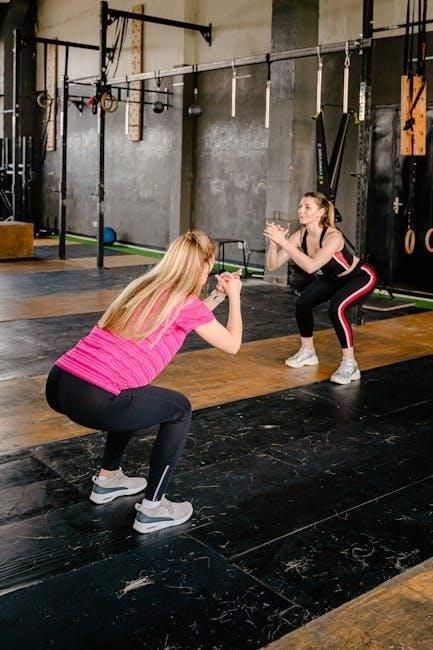
Squats are a cornerstone of any effective lower body workout, requiring no equipment at all. Start with the regular squat: feet shoulder-width apart, lower your hips as if sitting in a chair, keeping your back straight and core engaged.
Focus on controlled movements, ensuring your knees track over your toes. To increase the challenge, introduce jump squats. Perform a regular squat, but explosively jump upwards at the top of the movement.
Land softly and immediately transition into the next squat. Jump squats build power and elevate your heart rate, adding a cardio element to your routine. Prioritize proper form to avoid injury.
Lunges (Forward, Reverse, Walking Lunges)
Lunges are fantastic for targeting quads, glutes, and hamstrings, demanding balance and coordination. Begin with forward lunges: step forward with one leg, lowering your body until both knees are bent at 90 degrees.
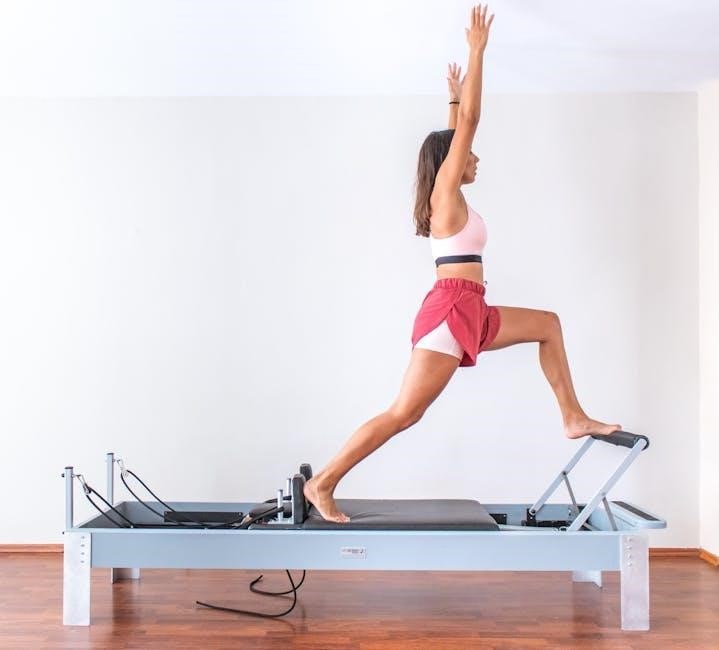
Ensure your front knee stays over your ankle and your back knee doesn’t touch the ground. Reverse lunges offer a variation, stepping backward instead of forward, providing a different muscle emphasis.
For an added challenge, incorporate walking lunges, continuously stepping forward with each lunge. Maintain a controlled pace and upright posture throughout all variations. Lunges build strength and improve lower body stability.
Upper Body Exercises
Strengthening your upper body without equipment requires creative approaches. Push-ups are foundational, with variations to suit all levels – standard, incline (hands elevated), decline (feet elevated), and diamond (hands close together).
These target chest, shoulders, and triceps. Tricep dips, utilizing a stable chair or surface, isolate the triceps effectively. Remember, push-ups alone aren’t sufficient; back muscles need attention.
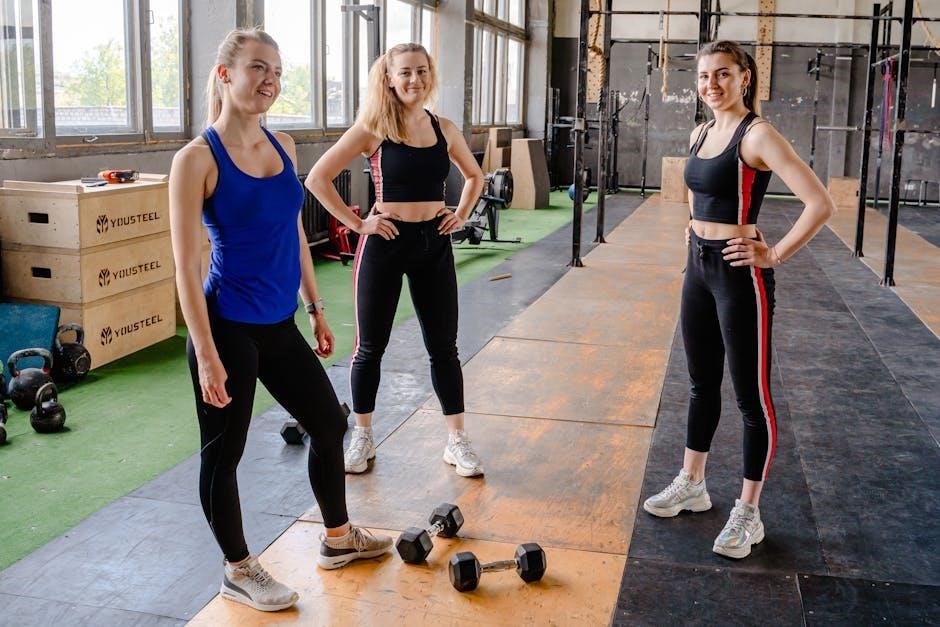
Consider seeking a doorway pull-up bar or utilizing playground equipment for pull-ups, crucial for back development. Focus on proper form to maximize results and prevent injury, building a well-rounded upper body.
Push-Ups (Variations: Standard, Incline, Decline, Diamond)
Push-ups are a cornerstone of no-equipment upper body training, offering versatile modifications. Standard push-ups target chest, shoulders, and triceps; Incline push-ups (hands elevated) reduce difficulty, ideal for beginners.
Decline push-ups (feet elevated) increase intensity, focusing more on the upper chest. Diamond push-ups (hands close, forming a diamond shape) emphasize triceps.
Mastering these variations allows progressive overload, continually challenging your muscles. Prioritize proper form – a straight line from head to heels – to avoid injury and maximize effectiveness. Remember, push-ups alone aren’t enough for complete upper body development.
Tricep Dips (Using a Chair or Stable Surface)
Tricep dips are an excellent bodyweight exercise for isolating and strengthening the triceps. Utilize a sturdy chair or stable surface, ensuring it won’t move during the exercise. Position your hands shoulder-width apart on the edge, fingers pointing forward.
Lower your body by bending your elbows, keeping your back close to the chair. Push back up to the starting position, fully extending your arms. Adjust difficulty by altering leg position – extended for harder, bent for easier.
Focus on controlled movements and proper form to maximize tricep engagement and prevent injury. Combine with push-ups for a comprehensive upper body workout.
Core Exercises
A strong core is fundamental for overall fitness and stability. These exercises require no equipment, making them accessible anywhere. Begin with the plank, holding a straight line from head to heels, engaging your abs. Variations include side planks for oblique work.
Crunches target the abdominal muscles; focus on controlled movements, avoiding neck strain. Reverse crunches engage the lower abs. Russian twists, performed with feet slightly elevated, add rotational challenge.
Remember to maintain proper form throughout each exercise to maximize effectiveness and prevent injury. Integrate these into your routine for a well-rounded workout.
Plank (Variations: Standard, Side Plank)
The plank is a cornerstone core exercise, building isometric strength and endurance. Maintain a straight line from head to heels, engaging your abs, glutes, and quads. Avoid sagging hips or a raised back. Hold for 30-60 seconds, repeating several times.
For a challenge, introduce side planks. Lie on your side, propping yourself up on your forearm, keeping your body in a straight line. This targets your obliques. Hold for 30-60 seconds per side.
Proper form is crucial; focus on controlled breathing and core engagement throughout both variations.
Crunches (Variations: Basic, Reverse)
Crunches are a classic core exercise, but focus on quality over quantity. Lie on your back with knees bent and feet flat. Engage your abdominal muscles to lift your shoulders off the floor, avoiding pulling on your neck. Perform 15-20 repetitions for several sets.
Reverse crunches target the lower abs. Lie on your back with knees bent and lifted. Use your core to curl your hips off the floor, bringing your knees towards your chest. Complete 15-20 repetitions.
Remember, DOMS (delayed onset muscle soreness) doesn’t always equate to growth; prioritize proper technique.
Russian Twists
Russian twists effectively engage your obliques and core. Sit on the floor with your knees bent and feet slightly elevated (or on the ground for stability). Lean back slightly, maintaining a straight spine. Twist your torso from side to side, touching your hands (or a light object) to the floor beside you.
Aim for 15-20 repetitions on each side, completing 3-4 sets. Focus on controlled movements, avoiding momentum. Remember, consistent form is crucial for maximizing results and preventing injury. Consider incorporating this into a full body routine for optimal core strength.
Cool-Down & Stretching (5 Minutes)
Prioritize recovery! Gentle static stretches post-workout reduce soreness and improve flexibility, aiding muscle repair and overall well-being after exertion.
Static Stretching for Major Muscle Groups
Following your workout, dedicate time to static stretching, holding each stretch for 20-30 seconds. Focus on major muscle groups worked – quads, hamstrings, calves, chest, back, shoulders, and triceps.
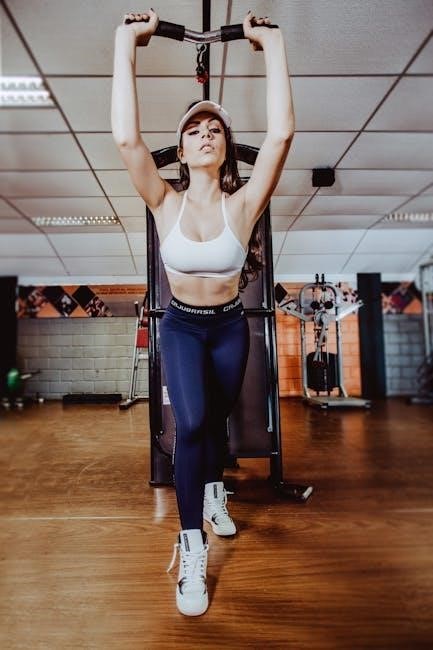
For hamstrings, seated toe touches or standing hamstring stretches are effective. Quadriceps benefit from standing quad stretches, gently pulling your heel towards your glutes. Calf stretches can be done against a wall.
Chest stretches involve clasping hands behind your back and gently lifting. Shoulder stretches include reaching across your body and pulling your elbow towards you. Remember to breathe deeply throughout each stretch, promoting relaxation and flexibility.
Importance of Post-Workout Recovery
Post-workout recovery is crucial for muscle repair and growth, often overlooked. Don’t mistake Delayed Onset Muscle Soreness (DOMS) for a sign of progress; it simply indicates muscle damage. Prioritize adequate rest, allowing your body to rebuild.
Nutrition plays a vital role – consume protein to aid muscle recovery. Hydration is also key, replenishing fluids lost during exercise. Active recovery, like light walking, can improve blood flow and reduce soreness.
Consider exploring resources like the bodyweightfitness FAQ on Reddit for in-depth information on recovery strategies and optimizing your training for long-term results.
Progression & Modifications
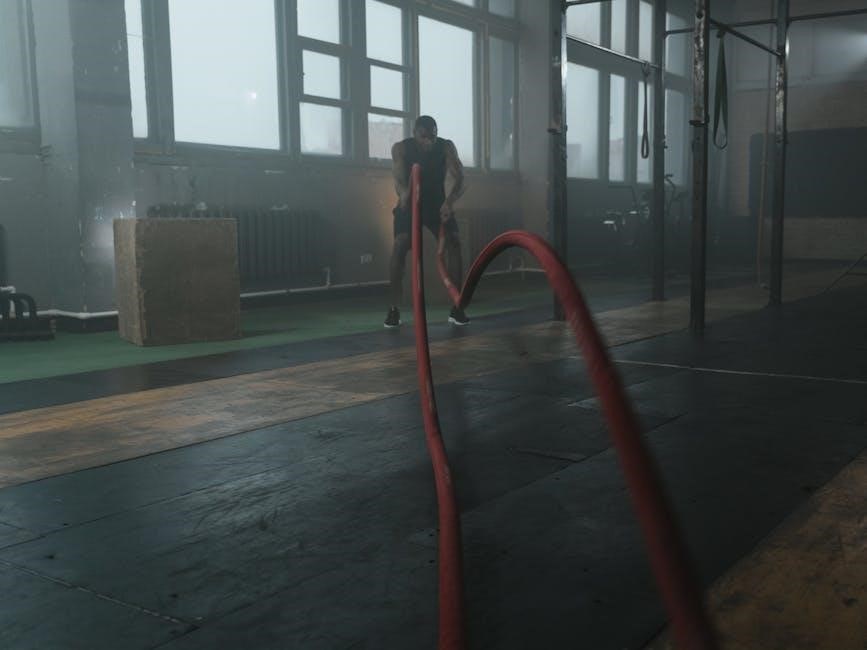
Adjust workouts by changing tempo, sets, and reps. Increase difficulty gradually; explore variations like jump squats or diamond push-ups for continued challenge.
Adjusting Difficulty for Different Fitness Levels
Beginners should focus on mastering proper form with fewer repetitions and sets, potentially modifying exercises – for example, performing push-ups against a wall or on the knees. Intermediate individuals can increase repetitions, sets, and explore more challenging variations like decline push-ups or jump squats.
Advanced fitness enthusiasts can further intensify workouts by slowing down the tempo of exercises (eccentric focus), adding plyometric movements, or incorporating more complex variations. Remember, consistent progression is key; don’t rush into advanced movements before building a solid foundation. Listen to your body and prioritize form over quantity to prevent injuries.
Adding Intensity Without Equipment (Tempo, Sets, Reps)
Elevate your workouts by manipulating tempo – slowing down the eccentric (lowering) phase increases time under tension, boosting muscle engagement. Increase the number of sets and repetitions gradually to challenge your endurance and strength. Consider pyramid sets, starting with higher reps and decreasing them with each set.
Introduce pauses at the most challenging point of an exercise, like holding a squat at the bottom. Combine exercises into circuits with minimal rest to enhance cardiovascular fitness. Remember, DOMS (delayed onset muscle soreness) doesn’t always equate to progress; focus on consistent, controlled movements.
Resources & Further Learning
Explore Reddit’s r/bodyweightfitness for community support and FAQs. Utilize apps like Caliverse, and consider joining free live workout sessions via Facebook groups!
Online Communities (Reddit r/bodyweightfitness)
Reddit’s r/bodyweightfitness is a vibrant hub for enthusiasts of all levels, offering a wealth of information and support for your no-equipment journey. It’s an invaluable resource for understanding proper form, exploring exercise variations, and discovering new workout routines.
Don’t simply jump into a program; delve into the FAQ section – it addresses common misconceptions, like the idea that DOMS (Delayed Onset Muscle Soreness) automatically equates to muscle growth. The community emphasizes progressive overload and provides guidance on adjusting difficulty. Users frequently share their experiences, ask questions, and offer encouragement, creating a supportive environment for achieving your fitness goals. It’s a fantastic place to learn about pull-ups and find inspiration for incorporating them into your routine, even if you need to find a suitable doorway frame or playground equipment!
Apps & Platforms (Caliverse)
Caliverse stands out as a comprehensive platform designed to elevate your fitness experience, even without equipment. Beyond pre-designed workouts, it offers a unique opportunity to participate in live workout sessions, a trend that gained significant popularity during lockdowns.
These sessions, often shared via platforms like Facebook groups (United Kingdom Calisthenics Community, Calisthenics Basingstoke), connect you with qualified coaches for real-time guidance and motivation. Initially, many coaches offered these sessions free of charge, simply sharing Zoom links. Caliverse continues to evolve, providing a space for both free and paid live training, fostering a dynamic and interactive fitness community. It’s a fantastic resource for personalized support and accountability!